

.webp?width=832&height=592&name=customer-support%20(1).webp)











 Car Finance
 Cars & Gadgets
 Car Maintenance
 Tips & Advice
 News
News
 Road Trips
 Pop Culture
.webp?width=400&height=285&name=online-shoppers-with-dog%20(1).webp)


.jpg?width=500&height=356&name=Vintage%20car%20going%20to%20an%20old%20town-1%20(1).jpg)


Written by

Verified by


 What we cover


Selling your car in the UK is usually quickest online, with it being the most convenient with a dealer part-exchange or most profitable through a private sale. Choosing the right one for you depends on whether you prioritise speed, convenience or getting the most money for your motor.
Selling a car is far easier than it used to be. Online platforms, dealer services and private marketplaces now give you several straightforward ways to sell without unnecessary stress.
In this guide, we’ll walk you through the pros and cons of each method, and take you through the steps you need to take to sell your car safely, legally and with the minimum of fuss.
Key takeaways
-
Know your priority: price, speed, or convenience
-
Research your car’s value (with tools like Carmoola’s free car valuation tool) to make sure you get the right price
-
Preparation is key to getting a good deal and a smooth sale
-
Always confirm payment before releasing your car
-
Notify the DVLA immediately to avoid future issues
What’s the best way to sell your car in the UK?
The best way to sell your car depends on what matters most to you: price, speed or convenience. A private sale usually brings the highest price, an online buying service is often the fastest option, and dealer part-exchange is typically the easiest.
There’s no definitive ‘best’ way to sell your car in the UK, so let’s take a look at those three main methods in more detail.
How dealer part-exchange works
Part-exchanging your car at a dealership is a very convenient way to sell your car. You simply hand your old car over to the dealer when you collect your new one, and its value is knocked off the new car's price. There’s just one transaction, and the dealer will be on hand to help you complete all the paperwork.
However, you’re likely to get less money for your old car if you part-exchange it. That’s because a dealer will offer you the ‘trade’ price for your car, which gives them a profit margin and enough to cover their overheads.
If you’re trying to balance your budget, it could be worth exploring whether refinancing your existing car finance could help make things more affordable. To find out your budget, you can use our free car finance affordability tool.
Part-exchange pros and cons
Pros
-
Very convenient; single handover and transaction
-
Safe and easy payment
-
The dealer can help with paperwork
Cons
-
Likely to get the lowest price
-
Relies on you buying a car from the dealer
-
The dealer may not want your old car
Selling online instantly
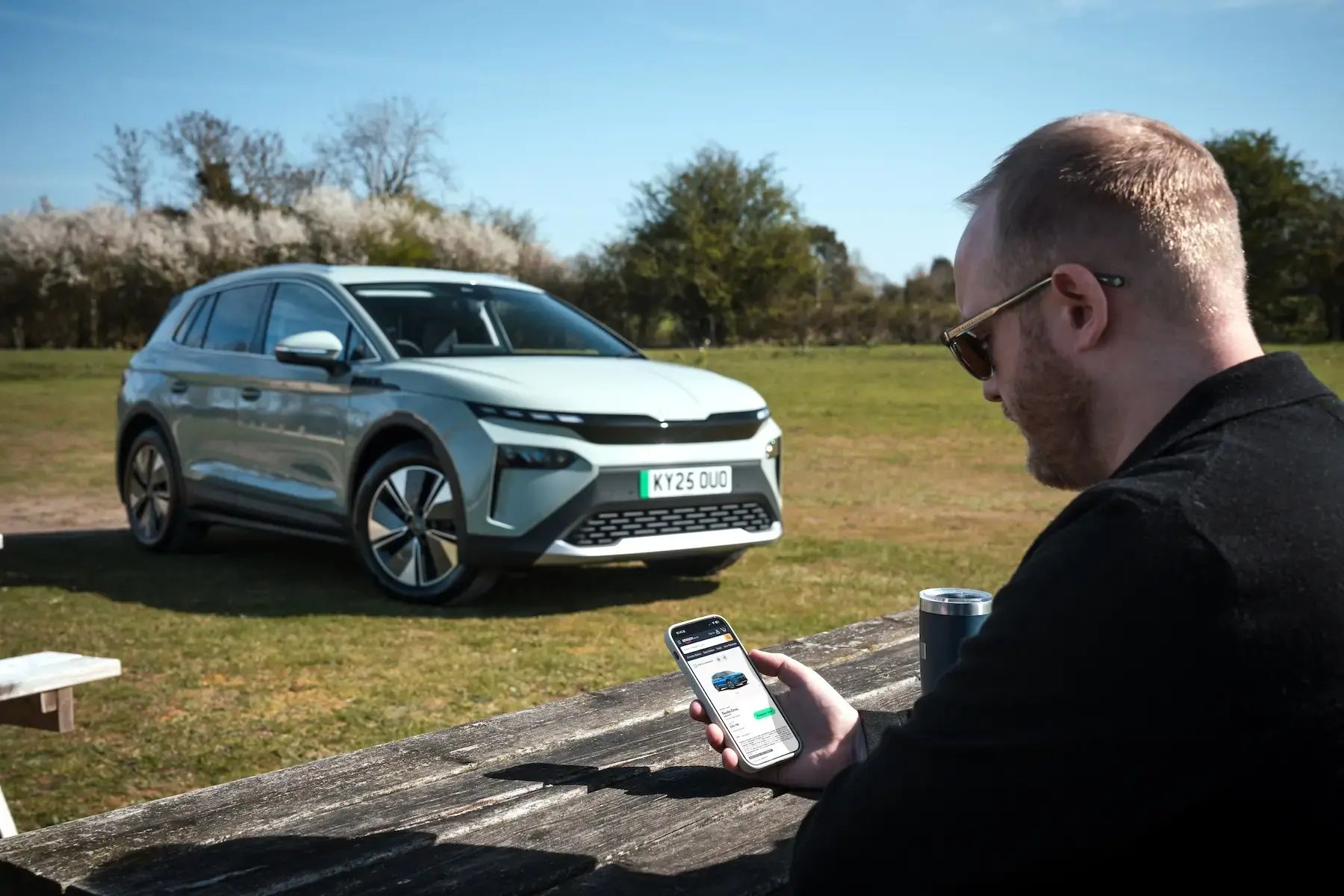
Online buying services tend to offer more for your car than a dealer would since they have lower business costs, but you’re unlikely to get as much as you would through a private sale.
If you’re using the proceeds from selling your car as a deposit for your next one, you can use our monthly payment calculator to see what HP or PCP finance might look like for you.
The rise of online car-buying services has made it possible to sell your car with little more than a few clicks of your mouse or swipes on your phone. WeBuyAnyCar and Motorway are the two biggest names in the business, but there are many other sites that allow you to sell your car online in an instant.
The process varies from site to site, but in essence it’s very straightforward: enter the details of your car, get a valuation and then arrange for a handover. At the handover, your car will be inspected, and if it matches all the details you provided, you’ll get the agreed price. Payment is often instant, but if your car doesn’t match the details you provided, the valuation could be reduced.
Online car-buying services pros and cons
Pros
-
Fast sale
-
Can be done from your sofa
-
Price likely to be higher than part-exchange
Cons
-
Initial valuation could be ‘knocked down’
-
Price unlikely to match a private sale
-
Admin fees are likely to apply
Private sale
Selling your car privately will usually get you the best price. That’s because you can expect to receive the full ‘retail’ value. However, a private sale could involve more effort.
First, you’ll need to do some research to make sure you’re getting the right price, then pay to advertise it online (unless you want to try your luck sticking a sign in the window, of course).
Either way, you’ll then have to field enquiries from potential buyers and arrange for them to view or drive the car. If you allow them to take a test drive, you should ask for proof of insurance and check their driving licence. Depending on the car and where you advertise it, you may have to deal with ‘timewasters’ that aren’t serious about buying the car, or don’t want to pay the asking price.
Once you’ve agreed to a sale, make sure that the buyer’s funds have cleared before you complete the paperwork and hand over the car. It’s also worth creating a receipt for the sale.
Private sale pros and cons
Pros
-
Likely to get the best price
-
You’re in control of the process
-
You can advertise on multiple platforms
Cons
-
Can be time-consuming
-
You might have to deal with time-wasters
-
You’re in charge of the paperwork
How to get your car ready for sale
However you decide to sell your car, you need to prepare it to get the most money for it.
A deep clean should be your priority. You can choose to do this yourself or pay a professional. Bear in mind that a professional valet will involve using specialist tools and cleaning solutions that can be costly to buy yourself. It could also be worth investing in some finishing touches. New floor mats, wiper blades or number plates can be very cheap, but create a better first impression.
It may be possible to touch up any small exterior paint chips or scratches yourself, but if there are larger dings or dents, it may be worth getting these professionally repaired. Paintless dent removal is a useful, low-cost option that can fix small dents quickly and is usually carried out by a mobile technician at your home.
Remember to remove any personal data from the car’s infotainment system before you sell it. There’s usually a simple ‘factory reset’ option in the menu. Finally, gather together all the paperwork, including the V5C logbook, MOT certificates, service history, owner's manual, and receipts for any recent work.
Find out what your car’s worth
Getting an accurate idea of your car’s value is crucial when you sell it. You don’t want to accept less money than it’s worth, or hold out for an unrealistic price. Fortunately, this is easier than ever thanks to the wealth of information (and valuation tools) available online.
If you want a quick starting point, you can use Carmoola’s free car valuation tool to estimate what your car might be worth based on current market data. It’s a handy way to sense-check prices before listing your car or accepting an offer.
First of all, it’s important to understand the difference between market value and trade value. A car’s market value (often called its retail value) is what a buyer will pay for it. The trade value is what a dealer will pay for a car, before prepping it and selling it at its retail value.
The best way to find out your car’s retail value is to compare it with similar ones for sale. Most sites allow you to select search filters such as make, model, mileage, fuel type, service history, trim level, colour, options, location and more. Prices vary, so it’s worth checking multiple sites, and bear in mind that seasonal demand can be a factor: SUV values are often slightly higher in winter, while convertibles are generally worth more in spring and summer. Once you have an accurate idea of your car’s retail value, this should be your benchmark if you’re selling your car privately.
If you’re selling your car via a dealer part-exchange or to an online car buying service, you’re likely to be quoted its trade value. Online valuation calculators are a great way of establishing this, since most quote the trade value rather than the retail value. And be as honest as possible in how you describe your car to avoid disappointment down the line.
Documents you’ll need to sell your car
There are a few key documents you’ll need when you sell your car. The most important document is the V5C registration certificate (also known as the logbook). This proves you're the registered keeper and is needed to transfer ownership. There are different sections to complete depending on whether you’re selling your car to a private buyer or a dealer, and you can choose to either send the completed form to the DVLA or complete the process online. Either way, the new keeper needs to fill out and keep the ‘new keeper slip’ section, as proof they are the registered keeper until a new V5C document is sent to them by post.
If you lose your car’s V5C you can apply for a replacement using the DVLA website. It usually takes a few working days to arrive. It’s possible (but not advisable) to sell a car without a V5C. Most dealers and online buying services won’t accept a car without one, but if you sell your car privately, you can create a detailed receipt and inform the DVLA in writing that ownership has changed. The buyer must then apply for a replacement logbook.
Any car that’s over three years old needs a valid MOT, so you should make sure you have the certificate ready when selling your car. Any previous certificates are helpful but not essential. The Government’s online MOT checker allows you, or a potential buyer, to check the MOT history of any car (for free), simply by entering its registration number.
Your car’s service history is also useful when selling it, and a fully-stamped service book can boost its value, especially if it’s a main dealer service history. Likewise, receipts for recent maintenance can help maximise the price.
Final steps and handover tips
Once you've agreed to a sale, the final steps and handover are all about protecting yourself legally and financially.
A bank transfer is the safest option for a private sale, and it’s important to make sure the money is in your account before you hand over the keys. Most online car buying services will pay you using a bank transfer. Some offer instant payment (or within a few minutes) at the handover, while others may pay on the same day or within a few business days.
If you’re selling a car via a dealer part-exchange, you won’t get paid the cash as the value of your car will simply be knocked off the price of the new car you’re buying.
However you decide to sell your car, you should also cancel your car insurance when the sale is complete. You also need to inform the DVLA. The easiest way is to do it online, but you can also do it by post. Either way, you’ll need the 11-digit reference number on the car’s V5C. The DVLA will automatically cancel your VED (road tax) payments, and you’ll get a refund for any full months of remaining tax.
Conclusion
Selling your car online can be straightforward, and there are options to suit different needs and circumstances. A private sale is likely to get you the most money, while a dealer part-exchange could be the most convenient option, and an instant online buying service is likely to be the quickest.
Whichever route you choose, it pays to be prepared. Make sure you research the market value of your car, prepare it so that you get the best price for it, and get your documents organised.
For a safe and secure handover, be sure that the paperwork is sorted and payment has cleared before you hand over the keys, and notify the DVLA immediately after the sale.

What does the total amount payable mean in car finance?
Total amount payable is the full amount you’ll pay for a car finance deal, including the amount you borrow, interest, and any...


Can you get car finance without a driving licence?
Yes, lenders like Carmoola offer car finance without a driving licence. Carmoola accepts applications from customers with a UK...

Getting car finance with a CCJ: what you need to know
You might still be able to get car finance with a CCJ (County Court Judgment), but you’re likely to face stricter checks and...