

.webp?width=832&height=592&name=customer-support%20(1).webp)












 Car Finance
 Cars & Gadgets
 Car Maintenance
 Tips & Advice
 News
News
 Road Trips
 Pop Culture
.webp?width=400&height=285&name=online-shoppers-with-dog%20(1).webp)


.jpg?width=500&height=356&name=Vintage%20car%20going%20to%20an%20old%20town-1%20(1).jpg)


Written by

Verified by

 What we cover


Buying a car is exciting. Watching its value drop the moment you’re handed the keys? Not so much. It’s called depreciation, and it’s the hidden cost of owning a car.
How fast do cars really depreciate, though? How much does a new car depreciate per year? And is there anything you can do to slow it down? Our jargon-free guide has the answers to these questions, and more.
What is car depreciation?
Car depreciation is the decline in a vehicle’s value over time. While most things you buy lose value, depreciation hits harder with cars because they cost more, and you’ll likely want to sell or part-exchange yours down the line.
The depreciation rate varies by make, model, and age. Some cars lose value faster than others, and the pace of depreciation typically slows as the car gets older.
You might also hear terms like 'retained value', 'residual value', or 'resale value'. These all refer to how much value a car keeps over time. For example, a car that depreciates by 30% has a retained value of 70%.
How fast does a new car depreciate?
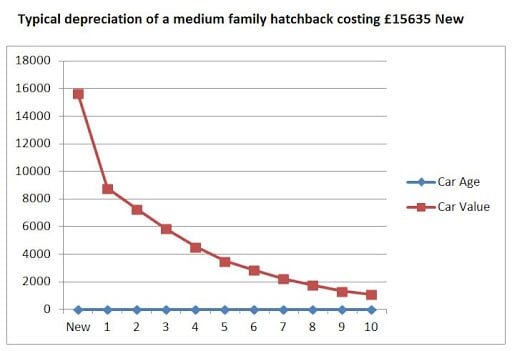
New cars lose value quickly, often thousands of pounds within moments of purchase. This is known as "instant depreciation" or "depreciation off the lot." You’ve probably heard it said that a new car loses thousands in value the moment you drive it off the forecourt. And in most cases it’s true. That beautiful new hatchback or SUV starts depreciating from day one, simply because it’s now a used car rather than a new car.
On average, a new car can lose up to 10% of its value the moment it becomes a used car. After one year, that figure typically grows to between 15% and 30%.
Depreciation then slows slightly. By the three-year mark, most cars are worth between 40% and 60% of their original price.
How fast does a used car depreciate?
Used cars tend to depreciate at a slower pace than new cars. Let’s say the average family car is worth about 50% of its value at three years old. After six years, it’s likely to be worth about 30% of its original value. So while it depreciates by 50% in its first three years, it only suffers 20% depreciation in the three years after that.
Beyond that, the depreciation rate is likely to slow down each year. After nine years, the same car is likely to be worth about 20% of its initial price, amounting to a depreciation of just 10% in years six to nine. And after that, a car won’t have a lot of value left to use. At twelve years old, it’s likely to have lost another 10% of its value, so it will be worth about 10% of its initial price.
Here’s an example, assuming an average level of depreciation:
| Car age | Depreciation form new | Value | Retained Value | Value loss from new |
| Brand new | N/A | £25,000 | N/A | N/A |
| 1 day | 10% | £22,500 | 90% | £2,500 |
| 1 year | 25% | £18,750 | 75% | £6,250 |
| 3 years | 50% | £12,500 | 50% | £12,500 |
| 6 years | 70% | £7,500 | 30% | £17,500 |
| 9 years | 80% | £5,000 | 20% | £20,000 |
| 12 years | 90% | £2,500 | 10% | £22,500 |
Remember that these are average figures. You can expect variations of 10% or more on either side of these, depending on various factors. These include a car’s make and model, condition, mileage, colour, fuel type, service history, trim level, number of previous owners and more.
If you're still paying off a car loan on a car that's now worth much less than when you bought it, car refinance could help reduce your monthly payments and better match your car’s current value.
Slowest-depreciating cars in the UK
The Carmoola Depreciation Index tracks used car prices using data from Brego. And it provides some revealing insight into which are the slowest-depreciating cars in the UK.
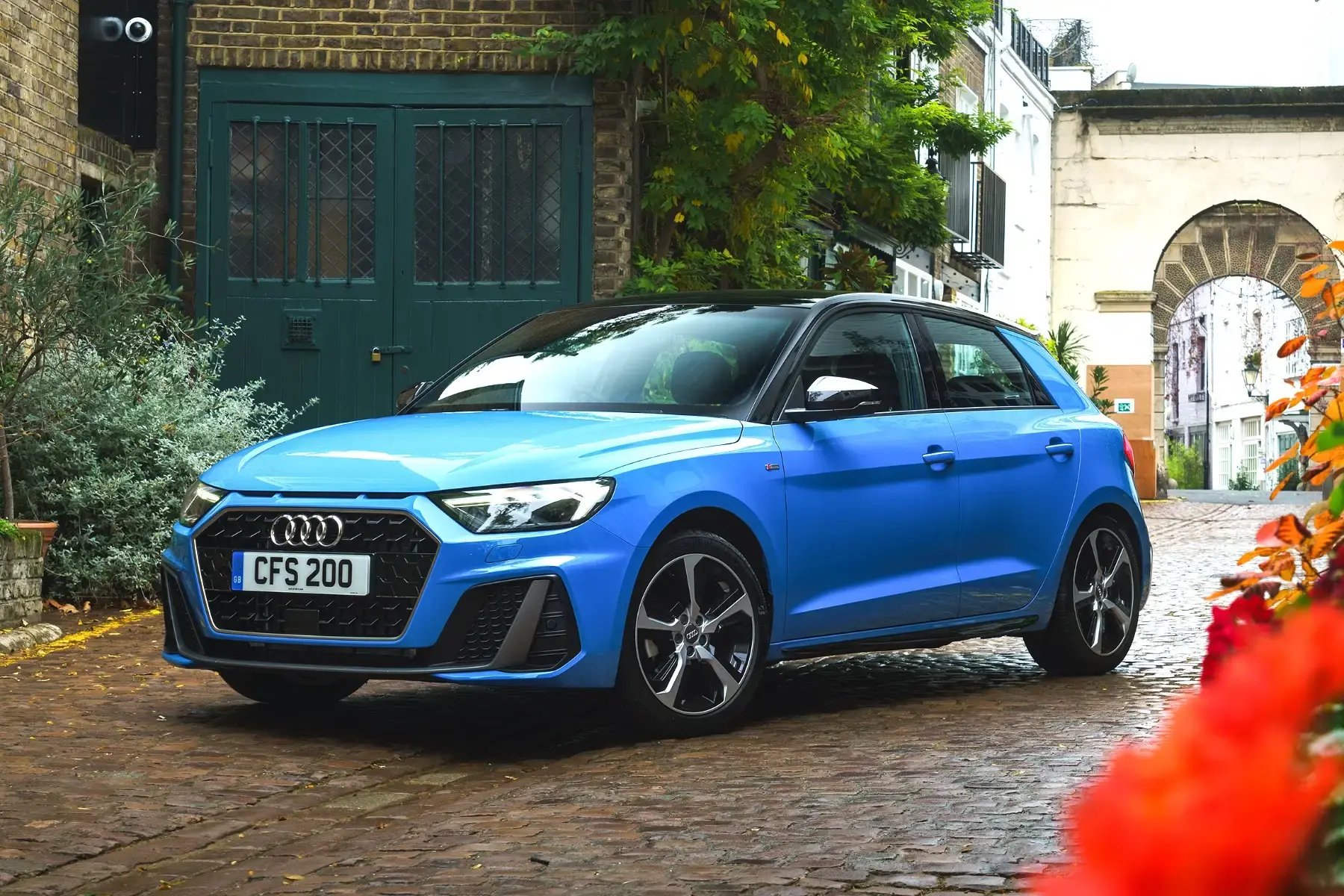
Here’s the top ten, with the slowest-depreciating at number one. For each car, we’ve listed its retained value after three years/36,000 miles, and its corresponding depreciation rate:
1. Audi A1
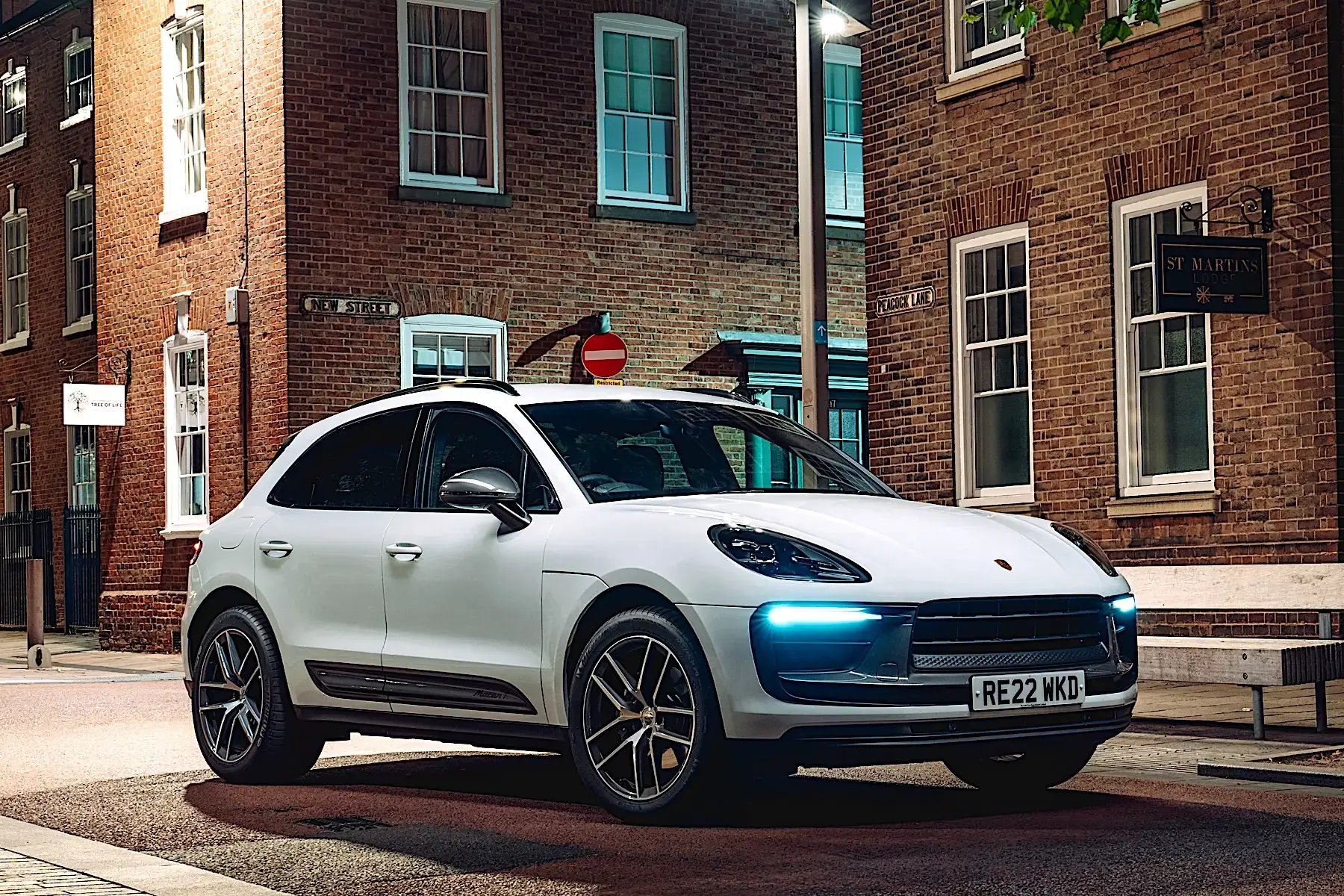
2. Porsche Macan
3. Hyundai i10
4. Kia Picanto
5. Toyota Yaris Cross
6. Volkswagen Polo
7. Toyota Aygo
8. Mini Countryman
9. Honda Jazz
10. Mini Clubman
Most of these are small cars available with either petrol or hybrid power. The exception is the Porsche Macan, a mid-size SUV that’s available with petrol or diesel engines.
Fastest-depreciating cars in the UK
Here are the top ten fastest-depreciating cars in the UK, according to the Carmoola Depreciation index:
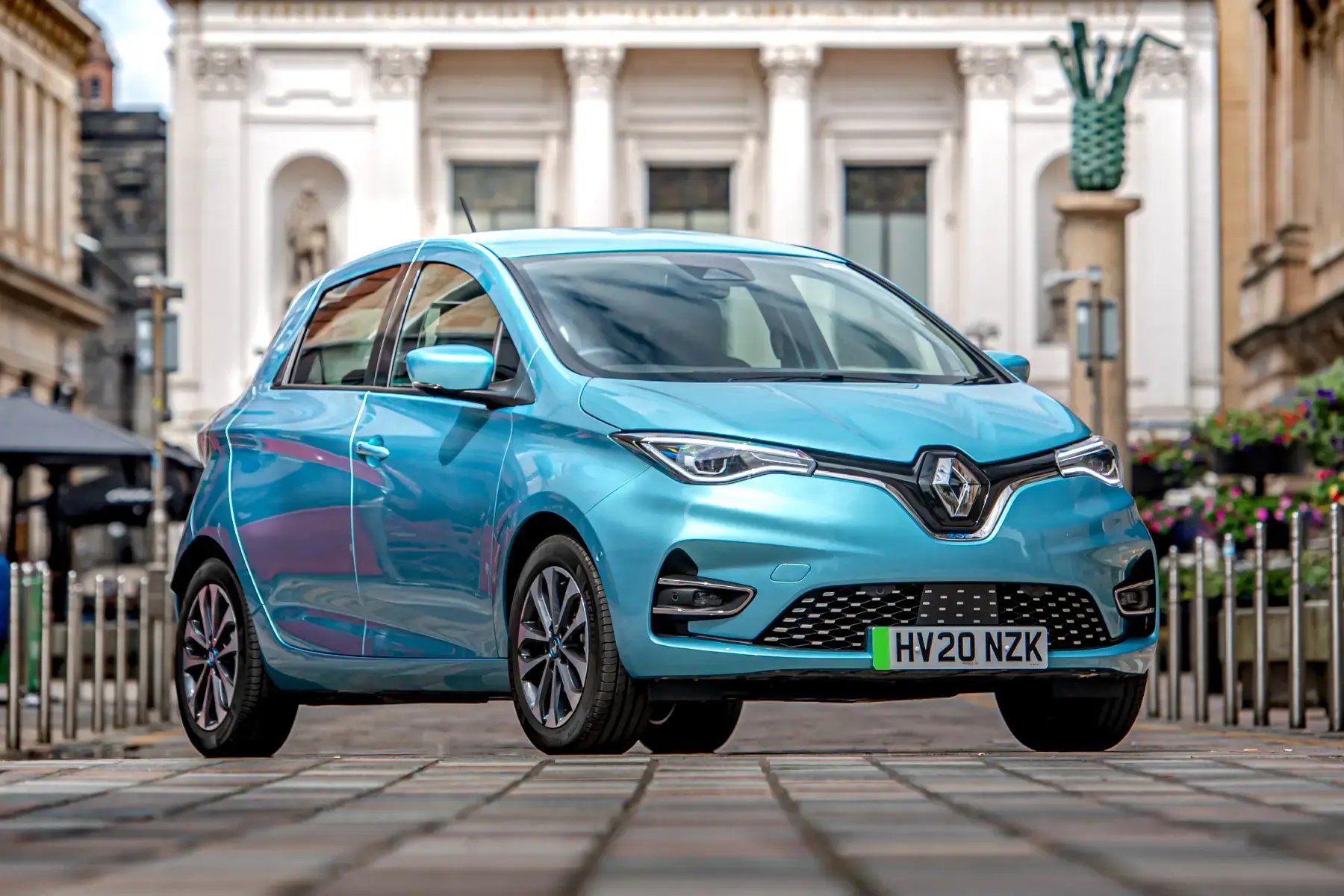
1. Renault Zoe
2. Jaguar I-Pace
3. Audi E-Tron
4. Vauxhall Corsa
5. Hyundai Ioniq
6. Nissan Leaf
7. Citroën C4
8. Vauxhall Mokka
9. Peugeot 2008
10. Peugeot 208
Of the 10 cars, four (the Renault Zoe, Jaguar I-Pace, Audi E-Tron and Nissan Leaf) are available only as electric cars. While the Hyundai Ioniq is available as a hybrid or electric car, the remaining five cars are available (depending on age) as either petrol, diesel, mild-hybrid or electric models.
How to beat car depreciation
There are lots of ways that you make sure your car depreciates as slowly as possible. Here are our top depreciation-busting tips:
Tip 1: Choose the make and model carefully
Desirable cars depreciate more slowly. It’s the simple economics of supply and demand. There are no hard and fast rules; in general, models from premium brands such as Audi, BMW and Mercedes-Benz tend to hold their value better than mass-market brands. There are exceptions, however, and in the Carmoola Depreciation Index, Audi models feature in both the fastest- and slowest-depreciating top 10s.
Tip 2: Buy a reliable car
Cars with a good reputation for reliability depreciate more slowly because they offer the promise of lower maintenance costs. You can see this clearly in the Carmoola Depreciation Index, because the list of top 10 slowest-depreciating cars includes models that have consistently scored highly in independent reliability surveys, such as the Hyundai i10, Honda Jazz, Mini Countryman, Toyota Aygo and Toyota Yaris Cross.
Tip 3: Go for a car with low running costs
For the same reason that reliable cars hold their value well, so do cars that have low running costs. Models that have especially good fuel economy, a low insurance group rating or which fall into a low tax bracket can dramatically reduce ownership costs, which in turn makes them more valuable on the used market.
Tip 4: Choose the right fuel type
The type of fuel a car uses can have a big impact on how fast it depreciates. Small cars are most desirable with petrol or hybrid power, while large SUVs and cars that are popular for towing are often preferred with a diesel engine. Having the ‘right’ fuel type means better retained value. All hybrid cars tend to hold their value well, but in the current market, most electric cars suffer from especially heavy depreciation.
Tip 5: Pick a good colour
Car colour affects its resale value. While grey is the UK’s most popular car colour for new cars, the Carmoola Depreciation Index suggests that bolder colours such as green or orange help your car to stand out in the marketplace and mean that it depreciates more slowly.
Tip 6: Look after your car
One of the main things that affects the value of your car is its condition. A car that’s been well maintained will always be worth more than one that’s been neglected. Any wear and tear that goes beyond what you’d expect of a car of its age will decrease its value, so it could be worth getting any scrapes fixed. A full service history makes a difference, too, and only a car that’s been serviced according to the manufacturer's guidelines will be eligible for any remaining original warranty.
Tip 7: Keep an eye on your mileage
A car’s mileage influences its value. The average annual mileage for a car is about 10,000 miles, and anything above or below this is reflected in how much it's worth. 100,000 miles is often seen as a milestone, and a car’s value can take a big hit when it reaches this point.
Tip 8: Buy a classic car
Collectable cars or classic cars can suffer from very little depreciation, and even appreciate in value. These cars are usually in limited supply and have dedicated fan bases that are willing to pay top money to find the right car. They’re often seen as solid long-term investments, but they are often costly to buy in the first place, and their appeal (and prices) can fluctuate over time.
Tip 9: Buy a used car
Used cars avoid steep initial depreciation. In general, the older the car you buy, the slower it depreciates. However, you might not want something that feels like it’s on its last legs. The sweet spot is arguably a car that’s 3-5 years old, since this will cost about 50% less than an equivalent new model but will still have plenty of up-to-date features.
For more info, check out our video: Car depreciation explained and how to beat it

What does the total amount payable mean in car finance?
Total amount payable is the full amount you’ll pay for a car finance deal, including the amount you borrow, interest, and any...


Can you get car finance without a driving licence?
Yes, lenders like Carmoola offer car finance without a driving licence. Carmoola accepts applications from customers with a UK...

Getting car finance with a CCJ: what you need to know
You might still be able to get car finance with a CCJ (County Court Judgment), but you’re likely to face stricter checks and...